

©$year Pivotal Ventures
What the Progress of 2025 Can Teach Us About the Possibilities of 2026
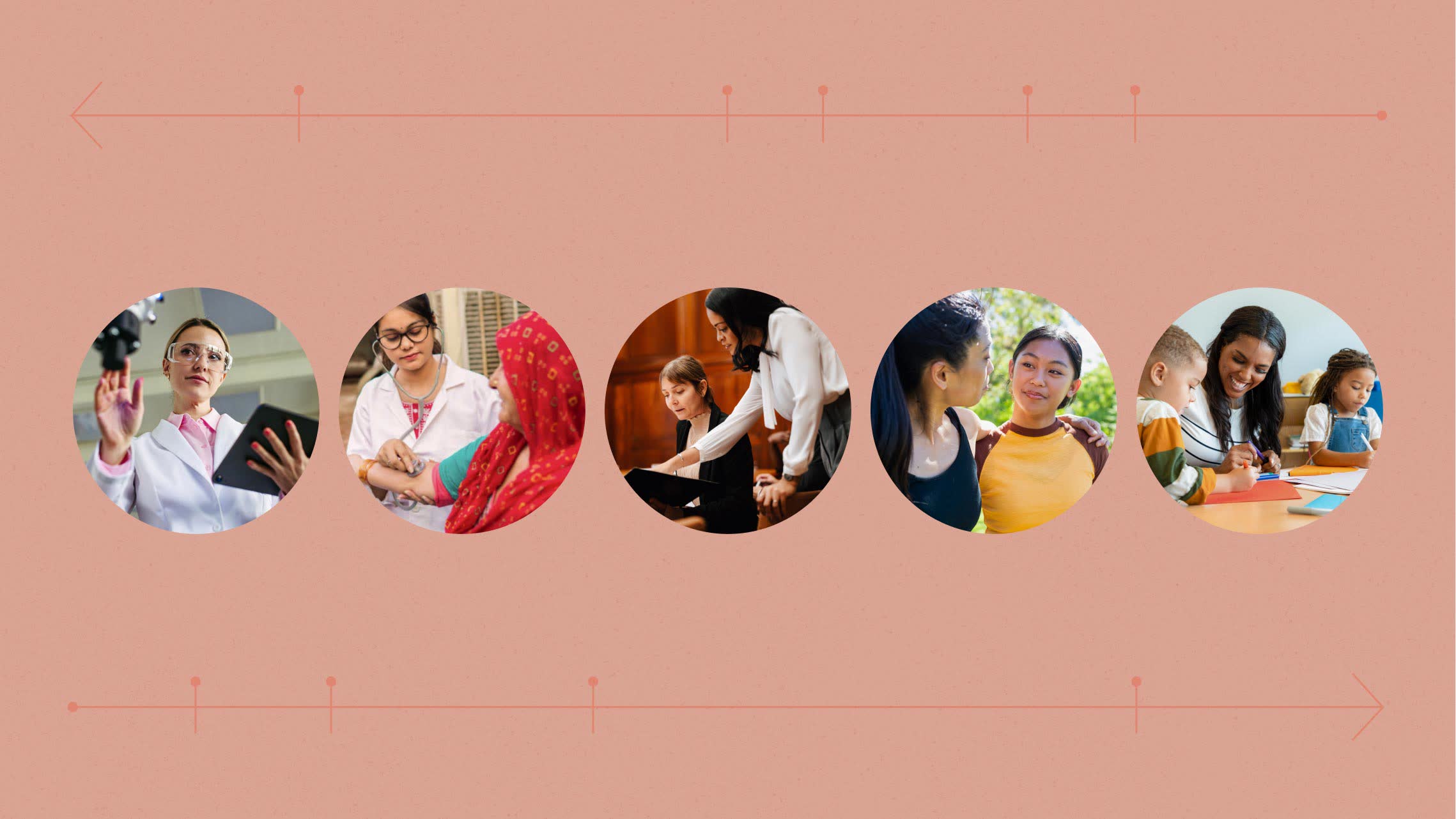
Images courtesy of Maskot, Tony Anderson, Halfpoint Images, Deepart386, SDI Productions, and Getty Images
Toward the end of last year, there was a headline you may remember coming across in your newsfeed: New Mexico became the first U.S. state to offer free child care to every single family.
Done right with careful design and oversight, this policy has the potential to transform lives across the state. As it stands, the caregiving system in the United States is broken, failing to get families the support they need—and relying on women to patch up the holes. If free child care is implemented successfully in New Mexico, families will stop paying more for childcare than they do for their mortgages or rent, poverty rates are likely to decline, and more women will have the freedom to pursue the careers they desire.
There is, of course, work ahead to ensure that this policy lives up to its promise and avoids the issues that have undermined public trust elsewhere. Still, the commitment to act represents a profound step forward. In a year that saw no shortage of setbacks for women and families, it offered a much-needed reminder that, even in the most challenging and complicated of times, progress is always possible.
That’s not the same as saying that progress is easy.
There wasn’t one single thing that led to this moment for New Mexico. It took a broad coalition of advocates, activists, parents, teachers, lawmakers, and faith leaders working together to solve a problem. It required them to overcome many setbacks over the course of many years, never losing sight of their core mission. And it asked them to be creative in their approach, identifying a new funding source and changing how child care is framed—not only as an individual benefit, but as a critical driver of economic opportunity, both for families and for the state.
“The real story” of New Mexico’s success, said Linda Smith of the Buffett Early Childhood Institute, “is about process, partnership, and persistence.”
As the president of Pivotal, a group of organizations founded by Melinda French Gates, I see so many leaders and organizations demonstrate that same persistence all around the world. Despite the challenges they faced last year—and there were many—they stayed focused on their missions and refused to give up.
"Not all steps forward make the news. …But each and every effort is a brick laid in the foundation of the better world we're trying to build."
The Progress of 2025
When I reflect on the past year, what strikes me most is the range of progress we witnessed—from policies that improved everyday lives to political representation that better reflects society to the resilience of changemakers pushing forward no matter what.
Across the country, the year brought advances in how governments are addressing the needs of women and families. Seven states passed new laws that protect sexual assault survivors by expanding rights to advocacy, legal counsel, and forensic evidence tracking. Several states made it easier for young people to get the mental health support they need: allocating hundreds of millions of dollars in funding, adding more mental health professionals to schools (in Delaware and Georgia), and establishing an office of suicide prevention (in Michigan). At the national level, lawmakers passed a handful of new policies focused on expanding access to paid leave and more affordable child care.
2025 not only brought new life-changing laws and policies but also a more diverse set of legislators to create them. This past November, women’s representation in Virginia’s House of Delegates rose from 34 percent to 42 percent, adding to a growing trend of states increasing the number of women serving in their legislatures. And across the nation, a record 13 women across both parties now serve as governors.
Finally, one of the things that inspired me the most was the extraordinary resilience of organizations and individuals working for social progress around the world. As governments cut funding for women’s health, awardees of the Action for Women’s Health initiative found creative ways to get women the care they need, such as providing cervical cancer screenings in remote parts of Brazil and training grandmothers to become mental health counselors in Zimbabwe.
The global leaders whom Melinda selected in 2024 to distribute $20 million each in grantmaking funds demonstrate the kind of courage and resilience that is truly inspiring. If Shabana Basij-Rasikh can educate Afghan girls in defiance of the Taliban … if Leymah Gbowee can put herself in harm’s way to relentlessly pursue peace across West Africa … and if Hauwa Ojeifo can help Nigeria transform mental health care in a country rife with stigma … then I can’t help but expand my definition of what’s possible.
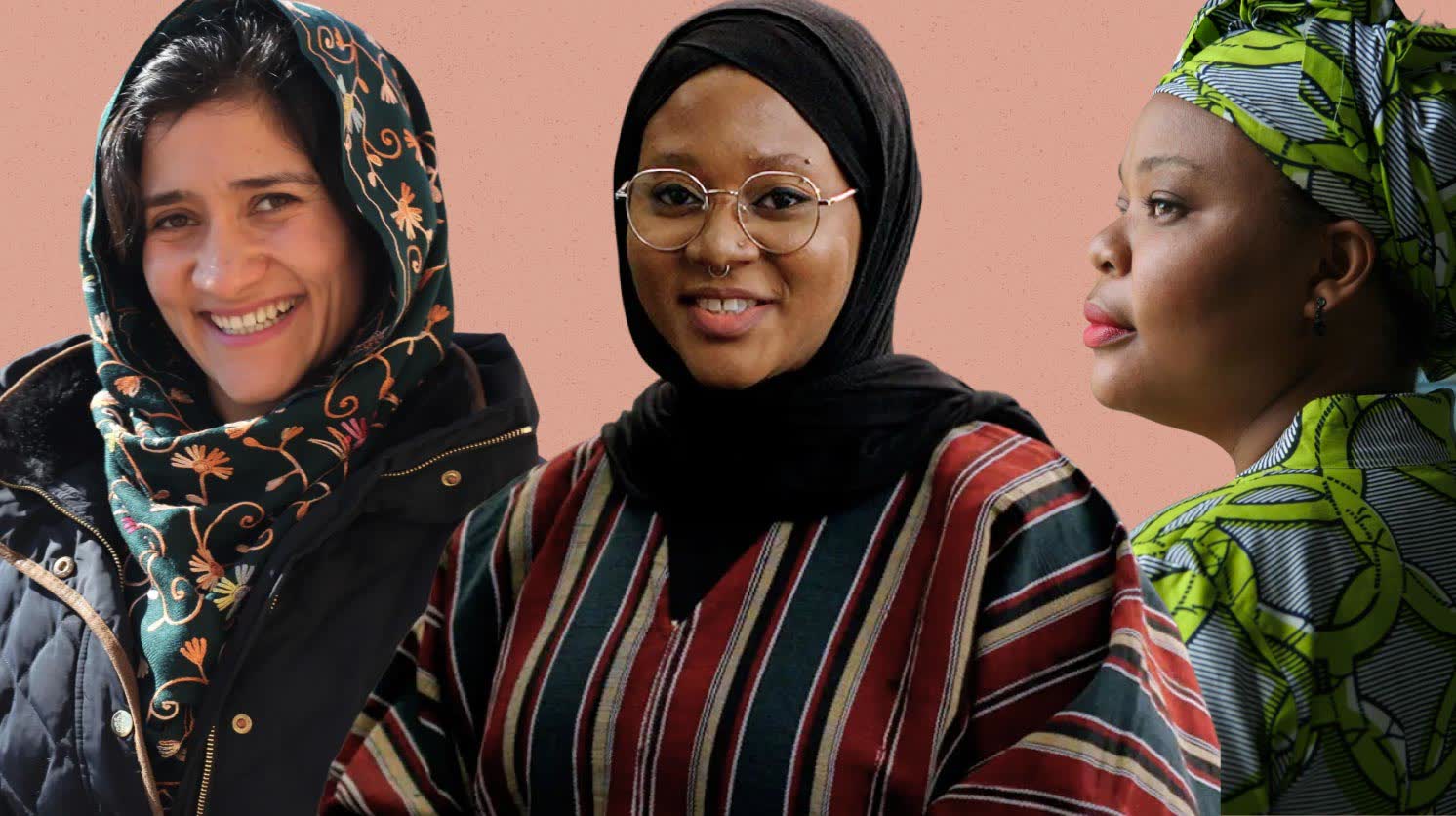
From left to right: Shabana Basij-Rasikh, Hauwa Ojeifo, and Leymah Gbowee
The Opportunities of 2026
Not all steps forward make the news. They don’t address every single challenge facing the fight for gender equality. But each and every effort is a brick laid in the foundation of the better world we’re trying to build. And when we look back on the impact made in 2025, it should fuel each of us to strive for more in 2026.
If more people in more places make it a priority to expand access to child care, the lives of millions of women and families across the country will be transformed.
If the barriers preventing women from running for office are removed, more may seek to fill the thousands of seats up for grabs in state legislatures next year, which could bring the country closer to equal representation.
If the world finally commits to delivering more research and better options for women’s health, we will unlock significant progress on an issue that women have fought to change for decades.
At Pivotal, we see enormous potential for opportunity to be unlocked in the year ahead. But forward motion is not inevitable. Right now, it remains in the realm of possibility—a dream that some might say is just that. But there is no question that, with persistence and courage, this vision can become reality.
Pivotal’s Commitment in 2026 and Beyond
I’ve never been a big fan of New Year’s resolutions, but there are a few that Pivotal has no trouble committing to.
In 2026, we will maintain our focus on expanding women’s economic and political power. We will prioritize the health and well-being of women and young people across the globe. We will continue to lift up bipartisan approaches, build alliances, and use every tool in our toolbox, from venture capital to charitable grantmaking to advocacy, to help remove the barriers that hold people back.
No matter the headlines or headwinds that come our way, we will stand firm in our commitment to our partners and the steady pursuit of progress.
If there is anything we resolve to do this year, let it be to never give up.