

©$year Pivotal Ventures
Why Leaders Need to Stay Focused on Care
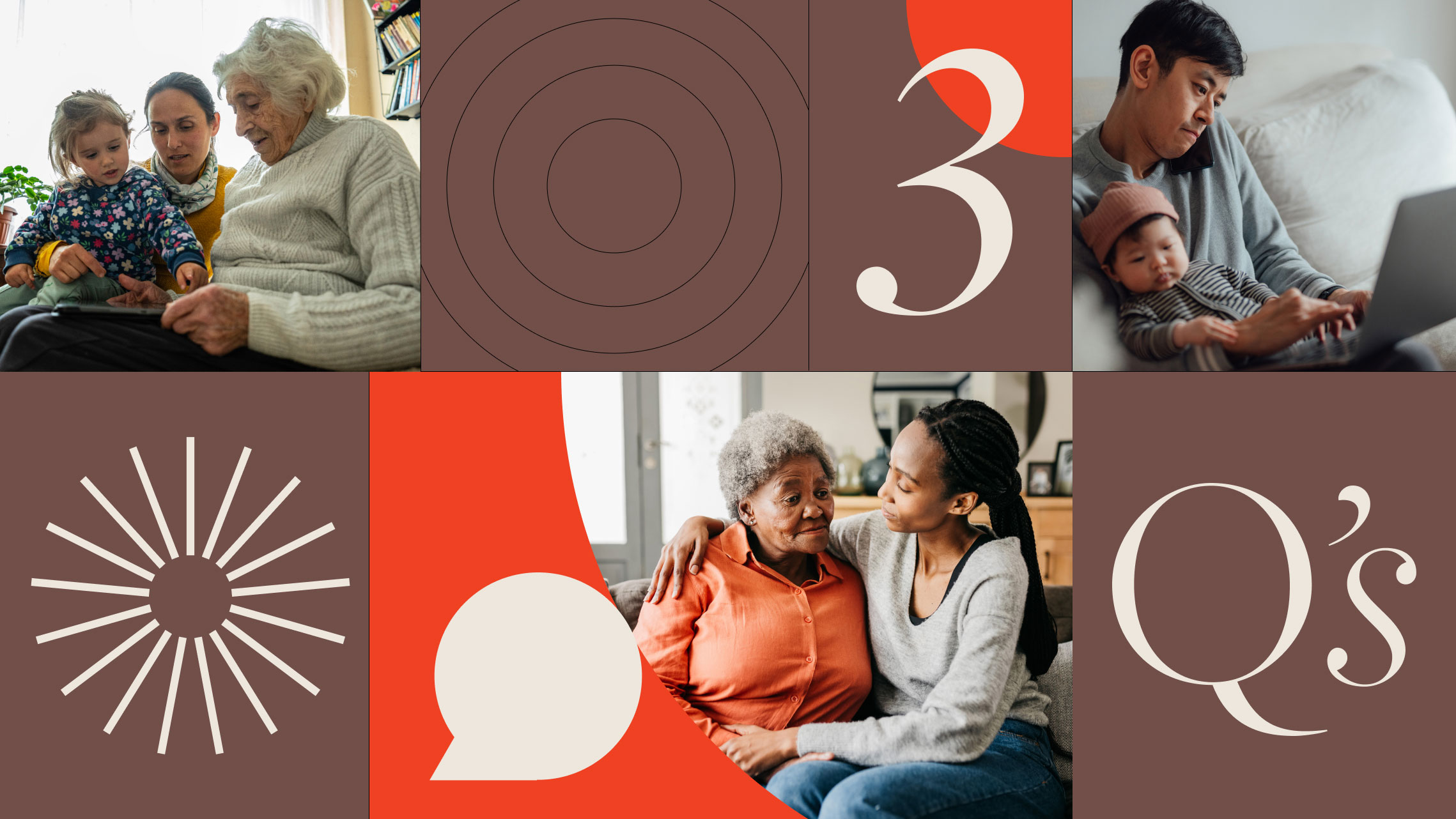
Images courtesy of Daniel Balakov, Oscar Wong, and Moyo Studio via Getty Images
What do you wish more leaders understood about the challenges caregivers and their families face every day?
There are 130 million caregivers in this country—around half of the adult population. Yet public and private leaders still view caregiving as a personal responsibility rather than an economic issue. As a result, so many families are left to figure out how to balance care responsibilities and work on their own, often feeling like they can’t talk openly about all that they’re managing.
Our partners at the National Alliance for Caregiving just co-released a report on sandwich caregivers—those caring for children and aging parents at the same time—that shows how this lack of support can impact families. They found that two in five sandwich caregivers have had to stop saving, while one in three have had to reduce their work hours or leave the workforce altogether. And more than one in four have found it hard to care for their own health. These numbers should be a wake-up call.
If leaders recognized how these issues are connected to a strong economy, employers would create more supportive workplaces for caregivers, lawmakers would invest more in care solutions, and investors and entrepreneurs would see the vast opportunity for innovation. Making it easier for people to care for their loved ones is the right thing to do and it’s good for the bottom line.
"Care is a core human experience that unites us, and it shouldn't be so hard or so expensive."
At Pivotal, we get to partner with so many extraordinary organizations working to make care more affordable for families. Tell us about a few that inspire you.
It’s hard to pick just a few, but I’ll highlight three that have some exciting work underway.
First, Caring Across Generations, under the visionary leadership of Ai-jen Poo, is bringing child care and long-term care together under one powerful movement. They just launched 1 Million Care Conversations to surface what families truly want and need when it comes to care, and they'll use these learnings to help educate leaders and push for better solutions.
Promise Venture Studio recently launched the Promise Fund to invest early-stage philanthropic capital in innovations that support kids ages 0–5 and their families. They start from the premise that leaders with deep community connections are in the best position to make transformative change.
Lastly, Moms First, led by the powerhouse Reshma Saujani, partners with the business community to show why child care benefits are good for working parents and for employers. Their research is bringing together a larger and more diverse group of leaders committed to better supporting families.
These partners see every day how hard it is for families to pay for and access care. Instead of saying this problem is too big, they're out there making the case for change.
What makes you hopeful about the difference this work can make for families?
In almost every conversation I have, people want to share their care story. Care is a core human experience that unites us, and it shouldn't be so hard or so expensive. Despite the very real challenges families are facing, I feel optimistic that change is on the horizon.
Care is being elevated in a way it has never been before. States are trying new and innovative ways to support their communities. Public officials are making care more of a priority. Employers are increasingly providing care benefits and recognizing their value. Innovators are picking care as their problem to solve, and investors are backing their ideas. And people are realizing that maybe it doesn't have to be this hard and they deserve better.
By keeping leaders focused on care, we have an opportunity to unlock a once-in-a-generation level of investment in the care economy that would fundamentally transform people's lives.
Learn more about our work on caregiving