

©$year Pivotal Ventures
New Gallup Survey Reveals the Costs of Overlooking Women’s Health
Photos by ArtMarie, fotostorm, fcafotodigital, and Hispanolistic via Getty Images
More than 40% of U.S. women feel that their health has limited their career. It’s put a promotion or leadership role out of reach. Left them feeling that they have fewer career options. Or made it too difficult to do their best work.
And when women aren’t able to get the care they need, that number increases to 66%.
When the world doesn’t invest in women’s health, that dramatically impacts how they can show up at work, at home, and in their communities. Now we know exactly how much.
Pivotal partnered with Gallup to conduct one of the most expansive surveys on women’s health and opportunity. It asked more than 5,200 U.S. women and men about their health, their experiences getting care, and the toll it all takes.
We found that women face too many barriers to care—significantly more than men do—and that poor health can shape nearly every aspect of their lives.
After all, a woman’s health is not separate from the rest of her life. She can’t put her symptoms to the side when she clocks in at work or cares for her family. She can’t find extra hours in the day to book her appointments. And when the system that’s supposed to help her thrive instead becomes a burden, it has lasting effects.
What inadequate care costs women’s careers
Too often, women’s careers are shaped not by their talent or ambition, but by health challenges they’re forced to navigate without adequate support. Those challenges, in turn, limit women’s economic power—their ability to contribute and influence decisions at work, earn for their families, and accrue wealth—and constrain our economy too.
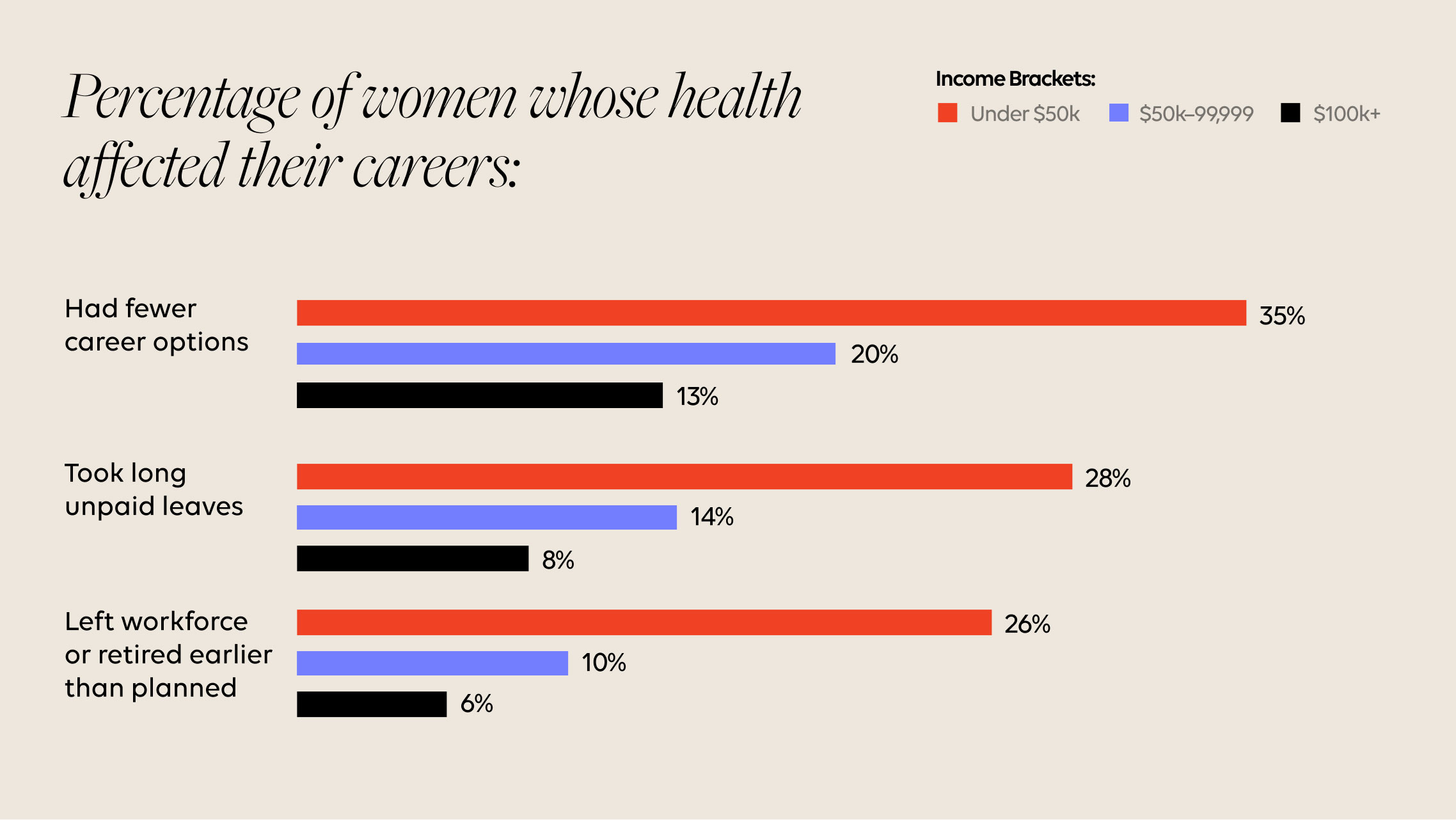
This burden falls heaviest on women of color and lower-income women. Gallup found that Black women were 6 to 7 percentage points more likely than white women to say their health has affected their career—forcing them to reduce hours, take a long unpaid break from their jobs, or retire earlier than planned. Compounded by a wage gap that leaves Black women earning just 63 cents on the dollar, these setbacks can make it even harder to advance professionally and build wealth. Lower income women can be twice as likely to face those negative impacts.
Source: Gallup
Left without answers
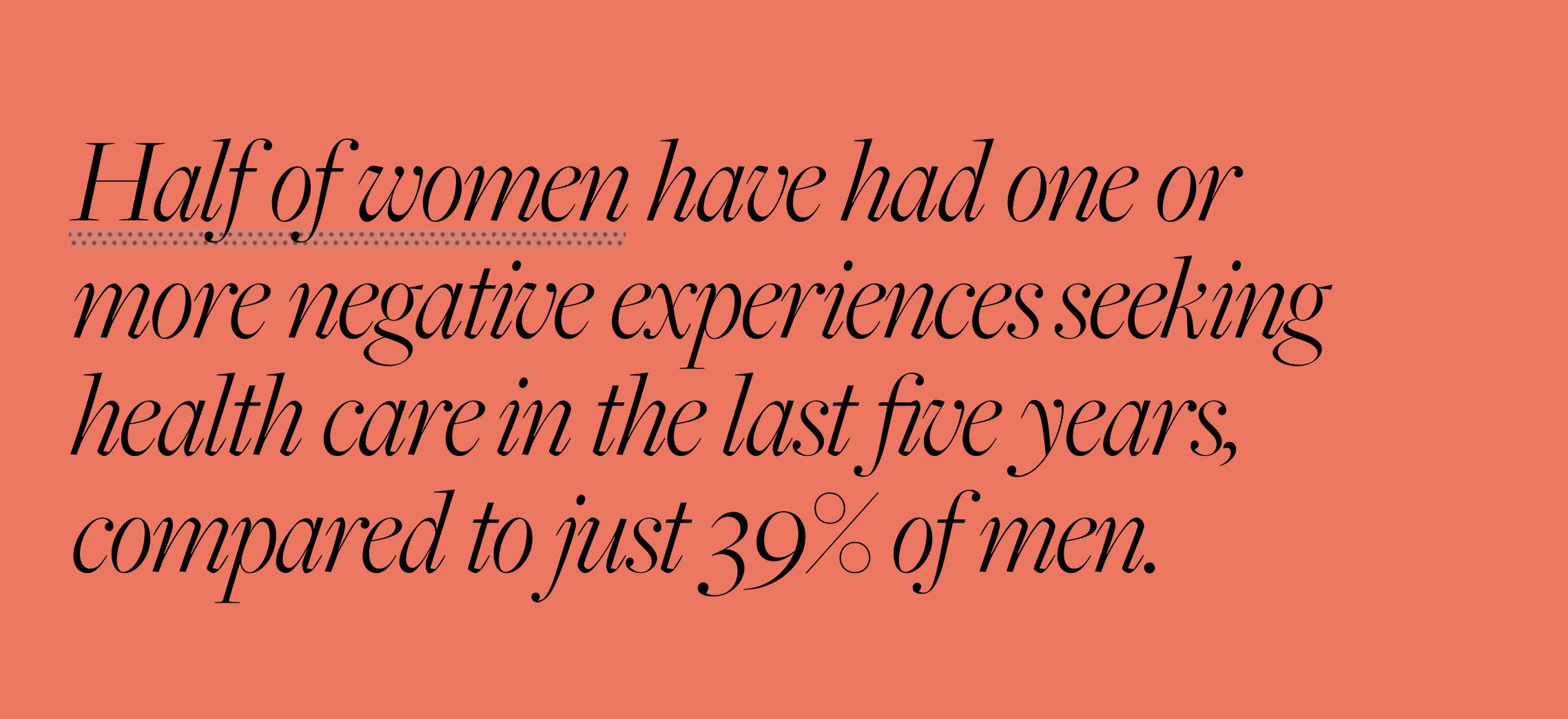
One reason health affects so many women’s careers is that getting quality care can be so difficult, an endless series of delays and dead ends. Half of women have had one or more negative experiences seeking health care in the last five years, compared to just 39% of men. Their pain was dismissed. Their conditions were misdiagnosed. Different doctors gave them conflicting recommendations about what to do next—or they didn’t give recommendations at all.
Source: Gallup
Women navigating the health system often encounter a familiar challenge: having to fight to be heard. Three in ten women said they had to push to be taken seriously or receive the treatment they needed, and one in four said they were unable to get the care they needed at all.
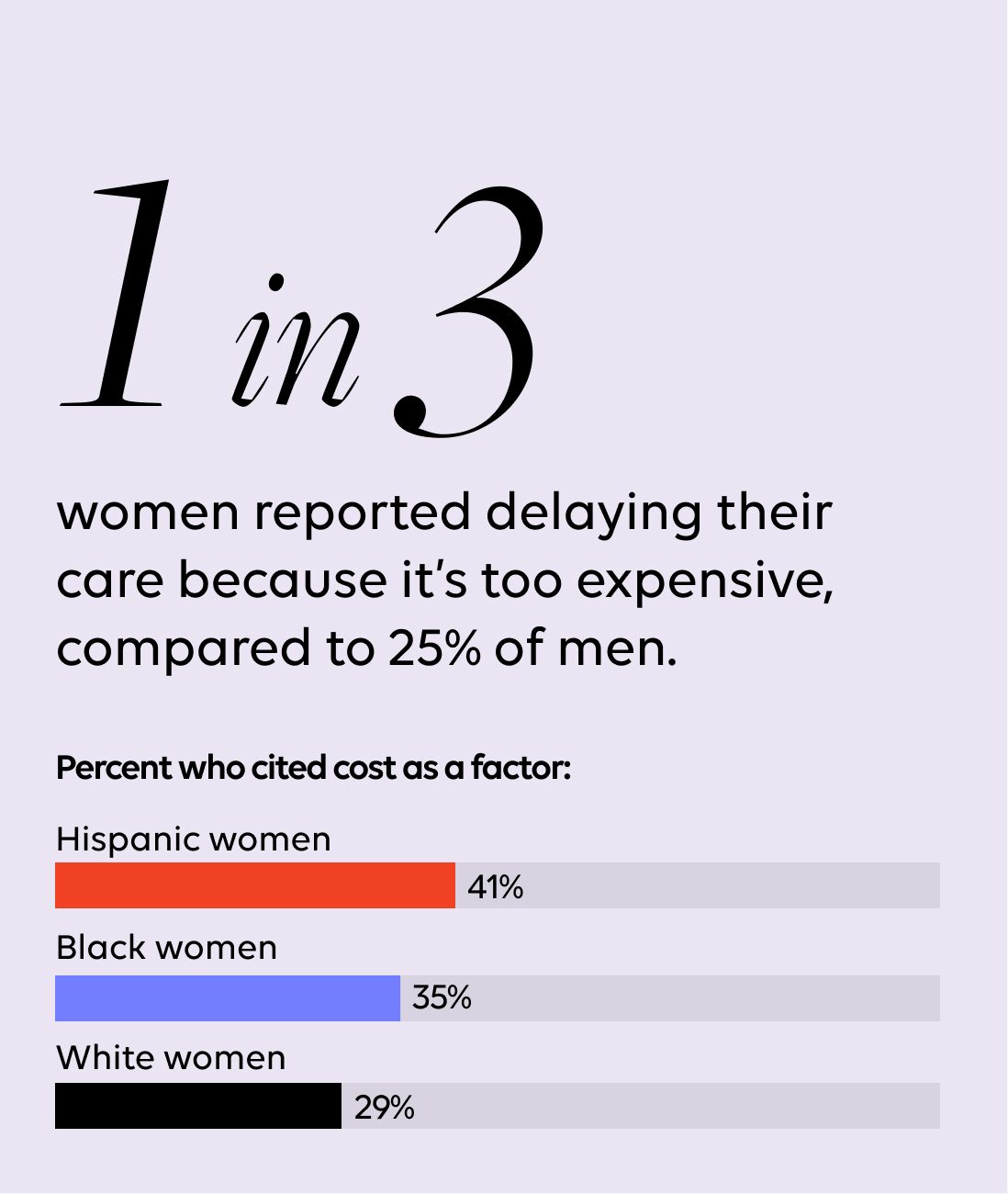
The barriers between women and the care they need can arise long before they even reach an exam room. Cost, caregiving responsibilities, and other competing demands can force women to delay care when they need it most. That’s more true for women than men. And it’s especially true for women of color.
Source: Gallup
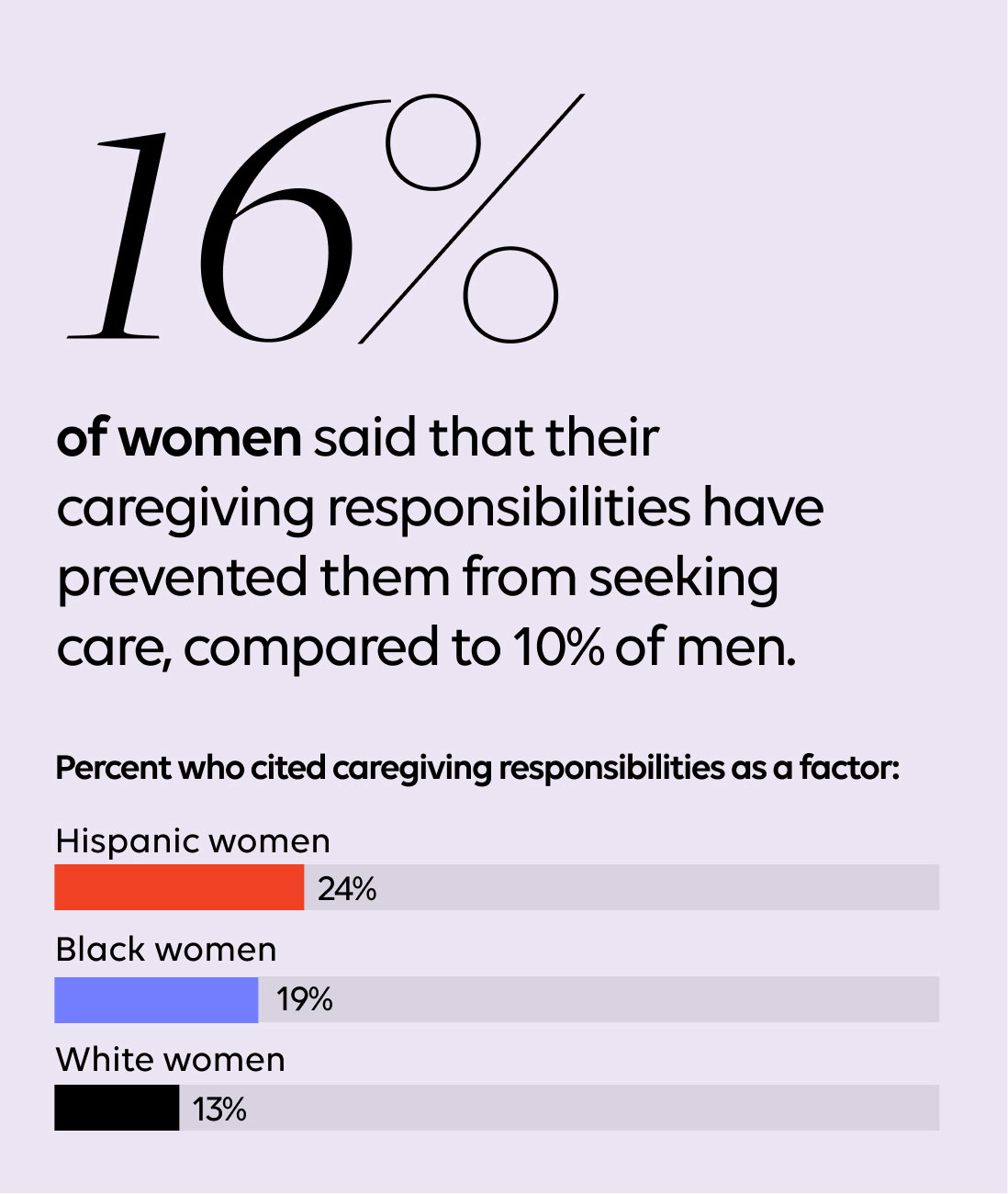
Source: Gallup
At critical moments, the costs add up
A historic lack of investment in and attention to women’s health leaves them without the care and information they need at critical stages of their lives. And that can have lasting impacts on their careers.
The health effects of pregnancy—even after birth—can have a significant impact on a woman’s career and her ability to build wealth over time. Some women choose to cut back at work after they have a baby. But for many, it’s not a choice, as health issues force them to reduce their work hours, change jobs, take extended leaves, or leave work altogether.
Menopause is another critical stage that can derail women’s lives if they don’t get good care. Given the historic lack of attention to menopause—in research labs, in med schools, and in clinics—that happens disturbingly often, especially for something that nearly every woman will experience. One in four women seeking treatment for menopause said they had to push their doctors to take them seriously.
Menopause symptoms aren’t merely a discomfort or inconvenience. Untreated, they can profoundly affect a woman’s health—including on her sleep, mental health, and cognitive function, all of which can have detrimental effects on her career and livelihood. Other symptoms are associated with serious conditions like elevated cardiovascular risk.
Over a quarter of women who have experienced menopause or perimenopause said it has made them unable to perform to their full potential at work. And one in ten have had to take extended leave from their jobs or leave them entirely—potentially pushing them into retirement earlier than they’d planned for.
The costs of poor health stretch far beyond the office. Women miss opportunities to attend holidays and weddings with family and friends, to pursue their hobbies and passions, and to live the lives they’ve imagined for themselves. Women reported that their health changed their plans to have children and their status in their own families, giving them less say in finances and other household decisions. For some women, their health also limited the ways they could participate in their communities, including whether they felt able to pursue leadership roles or run for office.
Society benefits when women have more power at every level—from their households to C-suites and legislatures. When their health and their ability to get health care make it more difficult for them to attain and use that power, and contribute their leadership and ideas, we all pay the price.
Sign up to receive the latest news about our work.
The opportunity ahead
Women’s health is often treated as a personal issue. This survey makes clear that it is also an economic issue, a family issue, and a community issue. When women’s health is neglected, our economy, our families, and our communities are all impacted.
The American people see that. At a time when Americans disagree on many issues, support for improving women’s health is remarkably broad. Most think women’s health should be a national priority and a shared responsibility that warrants greater attention from key institutions.
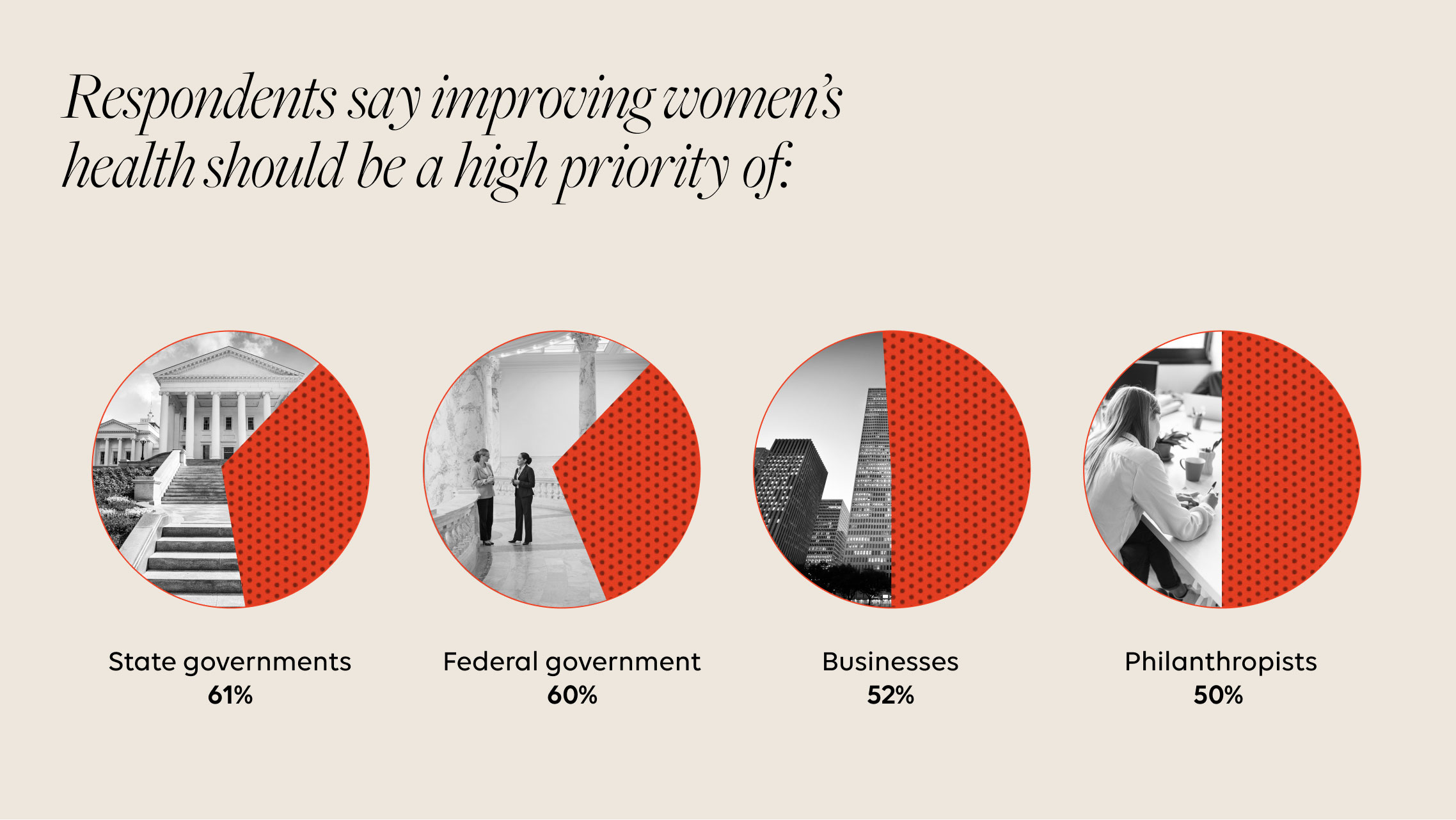
Source: Gallup. Photos by Sky Noir, franckreporter, Hill Street Studios, and lightkey via Getty Images.
The Gallup findings confirm what we’ve long believed at Pivotal: Women shouldn’t have to fight to get the care they need. Think about the ways women show up for themselves and the people around them in spite of their health challenges. Now imagine what their lives, and our society, would look like if they got the care they needed.
Women need a healthcare system that sees them, listens to them, and takes their pain seriously. That’s the world women deserve, and the one Pivotal and our partners are working to build.
Learn more about our work on women's health